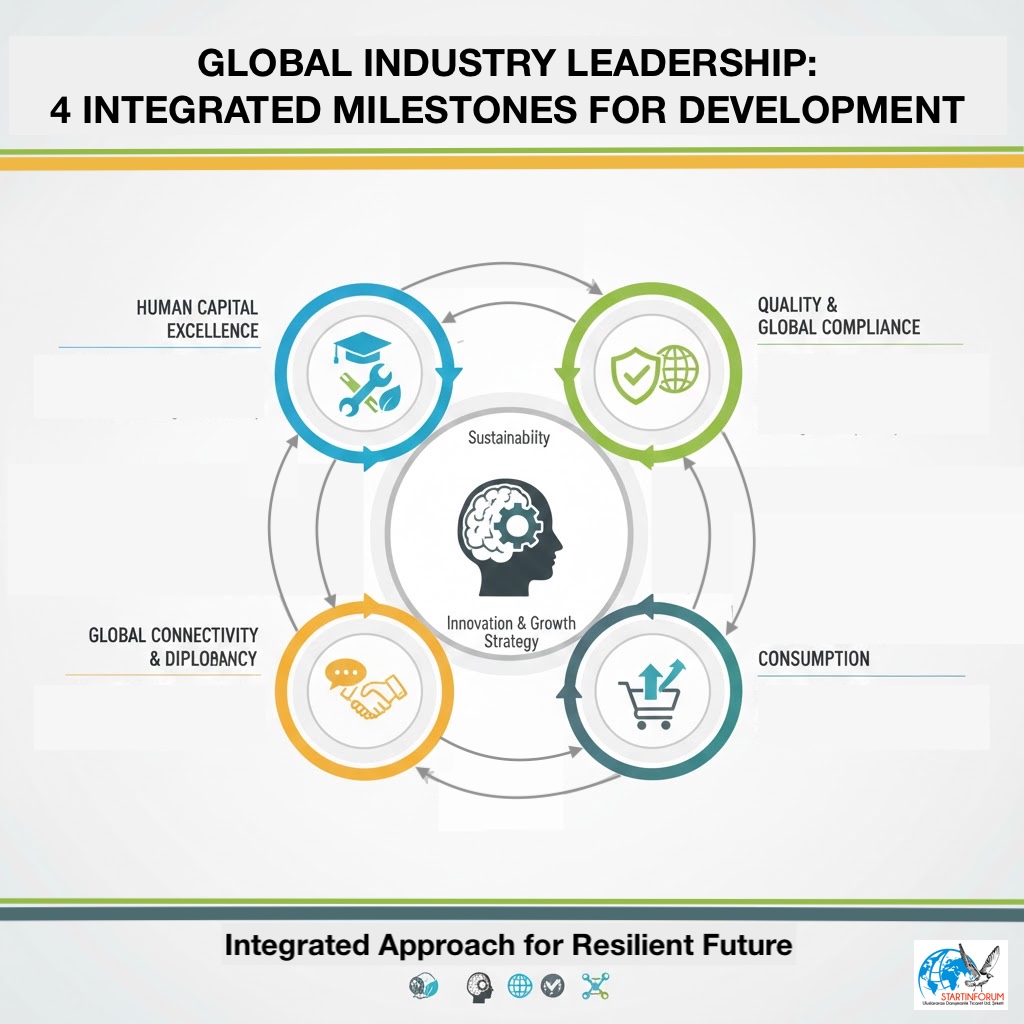
In today’s interconnected global economy, robust industry development is no longer just about production volume; it’s a multi-faceted endeavor deeply intertwined with human capital, international relations, and market reach.
Nations and businesses striving for sustainable growth must strategically address a series of critical milestones that transcend traditional economic metrics.
These include the unparalleled importance of personnel training and professionalism, the unwavering commitment to quality and international standards, the strategic necessity of international communication and diplomacy, and the expansive drive for national and international consumption of products and services.
Quality of Personnel Training and Professionalism: The Human Engine of Progress
At the bedrock of any thriving industry lies its workforce. Investing in the quality of personnel training and fostering a culture of professionalism are not mere expenses but strategic imperatives that yield exponential returns.
- Beyond Basic Skills: Modern industry demands go far beyond rote tasks. Training programs must be dynamic, incorporating critical thinking, problem-solving, digital literacy, and adaptability. This means moving away from static curricula to embrace continuous learning models, micro-credentialing, and practical, hands-on experience.
- The Professional Ethos: Professionalism encompasses more than just technical competence. It includes ethical conduct, accountability, effective teamwork, and strong communication skills. Industries must cultivate an environment where these attributes are valued and rewarded, as they are crucial for fostering trust, internal efficiency, and external reputation.
- University-Industry Linkages: Bridging the gap between academia and industry is vital. Universities must align their curricula with industry needs, while businesses must actively participate in designing vocational training and internship programs. Initiatives like dual diploma programs and joint research projects ensure a steady supply of highly skilled, industry-ready graduates. This “Quadruple Helix” model, exemplified by collaborations between universities, industry, government, and civil society, is the engine of sustained innovation.
- Lifelong Learning: In an era of rapid technological change, continuous professional development (CPD) is non-negotiable. Industries must facilitate access to advanced courses, workshops, and certifications, empowering their workforce to remain at the cutting edge and adapt to emerging technologies like AI, automation, and advanced analytics.
Quality of Work and Compliance with International Standards: The Gateway to Global Markets
Quality is no longer a differentiator; it is a fundamental expectation. For industries to compete on the global stage, their products and services must not only meet but often exceed stringent international benchmarks.
- Holistic Quality Management: This extends beyond the final product to encompass every stage of the value chain – from raw material sourcing and manufacturing processes to logistics and after-sales service. Implementing robust Quality Management Systems (QMS) like ISO 9001 and industry-specific standards (e.g., AS9100 for aerospace, IATF 16949 for automotive) is essential.
- International Compliance as a Competitive Edge: Adherence to international standards is the non-tariff barrier that can either open or close global markets. Compliance with certifications (CE Mark, FDA approval), environmental regulations (REACH, RoHS), and social responsibility standards (SA8000) not only ensures market access but also enhances brand reputation and mitigates risks.
- Sustainability and Circular Economy Principles: Quality in the 21st century also implies sustainability. Industries must integrate circular economy principles – reducing waste, reusing materials, and recycling – into their production cycles. This commitment to environmental stewardship is increasingly a prerequisite for international partnerships and consumer acceptance.
- Auditing and Certification: Regular external audits and independent certifications are crucial for verifying compliance and maintaining credibility. This transparency builds trust with international partners and consumers alike.
International Communication and Diplomacy: Navigating the Global Landscape
In an era where geopolitical shifts can dramatically impact supply chains and market access, proficient international communication and diplomacy are as crucial as technical prowess.
- Beyond Language Barriers: Effective international communication goes beyond mere translation; it requires cultural intelligence, nuanced understanding of business etiquette, and empathy. Companies must invest in multilingual capabilities and cross-cultural training for their personnel engaged in international trade and partnerships.
- Strategic Economic Diplomacy: Governments and industry associations must work in tandem to create favorable trade agreements, protect intellectual property, and resolve disputes. Industry leaders, through platforms like chambers of commerce and business councils, play a vital role in informing and influencing national trade policies.
- Building Trust and Relationships: Long-term international partnerships are built on trust. This involves consistent, transparent communication, reliability in commitments, and a willingness to understand and respect diverse perspectives. Conferences, trade fairs, and collaborative R&D projects serve as essential platforms for forging these relationships.
- Leveraging Soft Power: A nation’s cultural influence and reputation can significantly enhance its industries’ global appeal. Promoting national products and services through cultural exchange, public diplomacy, and high-quality international branding contributes to market penetration and consumer loyalty.
National and International Consumption of Products and Services: The Ultimate Validation
The ultimate measure of industry success is the sustained demand for its products and services, both domestically and across global markets.
- Understanding Market Dynamics: Continuous market research, consumer behavior analysis, and trend forecasting are essential for developing products and services that resonate with target audiences. This requires agility and the ability to pivot rapidly in response to evolving preferences and competitive landscapes.
- Strong Domestic Base: A robust national consumption base provides stability, scale, and a proving ground for innovation. Governments can foster this through supportive policies, consumer protection, and promoting local content where appropriate, without resorting to protectionist measures that stifle competitiveness.
- Strategic Export Development: For international consumption, a proactive export strategy is critical. This involves identifying niche markets, adapting products to local tastes and regulations, building strong distribution networks, and effective international marketing campaigns. Leveraging digital platforms and e-commerce has democratized global market access for many industries.
- Value Proposition and Branding: Beyond basic functionality, products and services must offer a compelling value proposition. Strong branding, ethical sourcing, and excellent customer service contribute to brand loyalty and command premium pricing in competitive international markets.
Conclusion: An Integrated Approach to Industrial Leadership
Achieving these milestones requires an integrated, forward-thinking approach. It’s a cyclical process where investments in human capital lead to higher quality work, which opens doors to international communication and, ultimately, drives national and global consumption. Nations and industries that prioritize these interconnected pillars will not only achieve sustained economic growth but will also solidify their position as leaders in the globalized landscape of tomorrow.


Leave a Reply