
The recent heartbreaking tragedies in Kahramanmaraş and Şanlıurfa, Turkiye, have acted as a grim wake-up call, revealing that the “walls” of our schools are no longer thick enough to keep out the complex psychological crises of the modern age.
Below is an expert article reflecting on our experts’ views and professional analysis by STARTINFORUM, detailing the current landscape of school psychology in Türkiye and the urgent roadmap required for reform.
Turkish school environment is viewed to be frequently dominated by a “performance-first” culture. With such an approach, the psychological dimension is often treated as a parallel service rather than an integrated foundation.
The results of such practices are in a high level of “test anxiety” while a “psychological sense of school membership” and “a sense of belonging” are frequently at risk.
If a student does not feel they “belong”, truly heard and valued, no amount of high-tech smartboards can facilitate genuine learning.
The Current Landscape: Theory vs. Reality
In the Turkish education system, psychological services are legally mandated and integrated into the structure of every school.
Formally, school counselors (often called “Guidance Teachers”) are expected to be the guardians of student well-being.
Their Official Duties include:
-
Preventive Guidance: Conducting classroom activities on bullying, addiction, and study skills.
-
Individual Counseling: Providing a safe space for students to discuss personal, academic, or social issues.
-
IEP Management: Coordinating Individualized Education Programs for students with special needs.
-
Crisis Management: Intervening in cases of trauma, loss, or violence.
The Harsh Reality
The reality in 2026 remains a struggle against caseload and role ambiguity.
In many public schools, a single counselor is responsible for over 500 to 1,000 students. This overwhelming ratio forces the counselor into a reactive role—dealing with fires once they have started—rather than proactive prevention. Furthermore, counselors are frequently burdened with administrative paperwork that has little to do with psychological health, effectively turning “mental health experts” into “office clerks.”
The school counselors are some of the most highly trained professionals in the country, yet their expertise is being “mismanaged” by the system.
-
The Expertise Gap: School counseling is often reduced to “vocational guidance” (which high school to choose). While important, this ignores the socio-psychological dimension of learning—the “Socratic” dialogue needed to foster critical thinking and emotional regulation.
-
The Burden of Paperwork: Counselors are often positioned as administrative buffers between the management and the student body. This “clerical” shift prevents them from performing deep-dive diagnostics—the early detection of radicalization, digital isolation, or family trauma that we now see erupting in tragedies.
Critical Gaps in Current Practices
Despite the existence of a guidance system, significant “blind spots” exist that the current expertise fails to cover:
-
Early Behavioral Diagnostics: There is a lack of structured, regular social-emotional screening. We wait for a student to “act out” or “fail” before we intervene, missing the silent indicators of isolation, resentment, or digital radicalization.
-
Special Education Competency: Many counselors report feeling inadequate when working with the increasing numbers of neurodivergent students (ADHD, Autism) or those with severe trauma, due to undergraduate curricula that are often too theoretical.
-
Digital Intelligence & Radicalization: The psychological dimension of “incel” subcultures and violent online communities is a new frontier that school psychological services are not yet equipped to handle.
There are three “silent gaps” that must be addressed:
-
Disciplinary Literacy & Emotional Intelligence: We focus on what to learn, but not the psychology of how to learn. Students are not taught the emotional resilience needed to process complex global narratives.
-
The Migration & Integration Crisis: Having scrutinized the impact of migration on the Turkish education system, it is clear that our psychological services are not yet “interculturally competent.” We are integrating thousands of students from war-affected backgrounds without a robust, specialized trauma-informed framework.
-
Digital Neuropedagogy: We are bringing AI into the classroom, but we are not bringing the psychology of AI and technological safety. We must understand how digital tools affect the brain’s development, social interaction, and potential for radicalization.
A Strategic Roadmap for Transformation
To transform school well-being from a slogan into a national priority, interventions must occur simultaneously at three levels:
1. The Systemic Level: Policy and Structure
-
Caseload Reform: The Ministry of National Education must prioritize a lower student-to-counselor ratio (ideally 1:250) to allow for genuine relationship-building.
-
Mandatory Professional Supervision: Counselors themselves need psychological support and regular, clinical supervision to prevent burnout and ensure the quality of their interventions.
-
Integration of School Nurses: Following the 2022 initiatives, widespread implementation of school health nurses is essential to differentiate between physical health, mental health, and administrative duties.
2. The School Level: Climate and Culture
-
Relationship-Driven Safety: Moving away from “policing” (metal detectors and guards) toward “psychological safety.” A school where every student feels “seen” by at least one adult is a school that is inherently safer.
-
Peer-Support Frameworks: Training students to be “first responders” for their peers. Often, a student will speak to a friend before an adult; we must empower this natural network.
3. The Triad Level: Teacher – Student – Parent
-
The “Supportive Triad”: We must move away from the “blame culture” between parents and teachers. We advocats for “Parent-Teacher Dialogue Hubs” where the focus is not on grades, but on the student’s emotional resilience and social integration.
-
Teacher Well-being: A stressed, burnt-out teacher cannot provide emotional safety. Professional development must include “Mental Health First Aid” training for all teaching staff.
Recommendations for Intervention
To bridge these gaps, a multi-level strategy based on Social Praxis should be considered for implementation:
1. Systemic Level: From Management to Mentorship
The role of the counselor should be redefined from a “Support Service” to a “Core Pedagogical Lead.”
Psychological expertise should inform curriculum design, not just crisis intervention. We need a “neuro-pedagogical” approach that respects the biological and psychological speed of the learner.
2. The School Level: Cultivating a Sense of Membership
Acceptance and respect are the primary drivers of academic success. Schools must move toward a “Boutique Academic Environment”—where the size of the group and the quality of the interaction take priority over the quantity of the student body.
3. The Triad Level: The Collaborative Loop
-
The Teacher: Must be trained as a “First Responder” in mental health, not just a content deliverer.
-
The Parent: Needs to be an active “Partner in Dialogue” – the “Parent-Teacher-Student Triad” should assure the psychological health of the child not a trap for blame and unbearable burden of responsibilities.
-
The Student: Must be empowered with “Self-Diagnostic” tools—learning to recognize their own stress and seeking help before it manifests as aggression.
Conclusion: School Education is The National Priority
The tragedies in our schools are symptoms of a deeper psychological erosion. Psychological well-being is not a “luxury” or a “side-service”—it is the foundation upon which all learning is built.
At STARTINFORUM, we are committed to providing the psychological expertise, diagnostic tools, and training necessary to bridge these gaps.
We believe that by focusing on early diagnostics and strengthening the teacher-student-parent triad, we can rebuild our schools as sanctuaries of safety and growth.
Call To Action
Partnership Approach (School Managers)
We Can Build a Sanctuary Together. The safety of our students is a shared responsibility that cannot wait. If your institution is ready to move beyond basic security and implement a deep-rooted psychological framework, STARTINFORUM team will be glad to share their expertise to assist. Please feel free to contact us for a consultation on early diagnostics, teacher-parent synergy programs, and systemic well-being reform.
Professional Service For Schools & Colleges
Secure the Future of Your School. Our team of educational psychologists are ready to provide specialized interventions, crisis management training, and audit-based reports on your school’s psychological climate. Please feel free to contact us for more details.
Will You Join the Dialogue?
Psychological well-being must become a national priority. Share this analysis to help us reach educators, parents, and policymakers. If you are an educator seeking support or a school leader looking to transform your institution’s mental health landscape, please reach out to the STARTINFORUM Board to begin the reforms.
Read The Latest

Navigating Turkiye’s New Economic Reality: A Practical Guide for Foreign Investors and Entrepreneurs
Türkiye presents a stabilizing macroeconomic environment marked by cooling inflation, high interest rates, robust foreign currency purchasing power, and strategic trade positioning between Europe, Asia, and the Middle East. For international entrepreneurs looking to tap into this dynamic market, Turkish commercial law offers a welcoming framework: foreigners can own 100% of a local company without requiring a local partner.

Morocco’s New Import Licensing for Steel Wires and Cables
According to an official notification transmitted by the Ministry of Trade, the government of Morocco has introduced a major regulatory update subjecting specific steel wire and cable products to mandatory import licensing requirements. Driven by decisions from the Moroccan Ministry of Industry and Trade alongside the Administration of Customs and Indirect Taxes, this new trade measure officially entered into force on June 11, 2026.
Navigating the EU Forced Labour Regulation
The European Union has officially launched its Forced Labour Single Portal following the implementation framework of the EU Forced Labour Regulation. Designed as a centralized digital hub, the portal supports stakeholders, regulators, and businesses in preparing for upcoming trade restrictions by providing guidelines, investigation updates, public data sources, and official product ban decisions.

Global Trade Landscape – July 2026
Navigating the global trade landscape requires watching a mix of structural economic shifts and acute geopolitical friction. The major macroeconomic and political dynamics reshaping cross-border trade fall into several key areas. Find out more …
Invisible Fronts in the Defense Sector: Human Factors, Language Barriers, and Cognitive Readiness
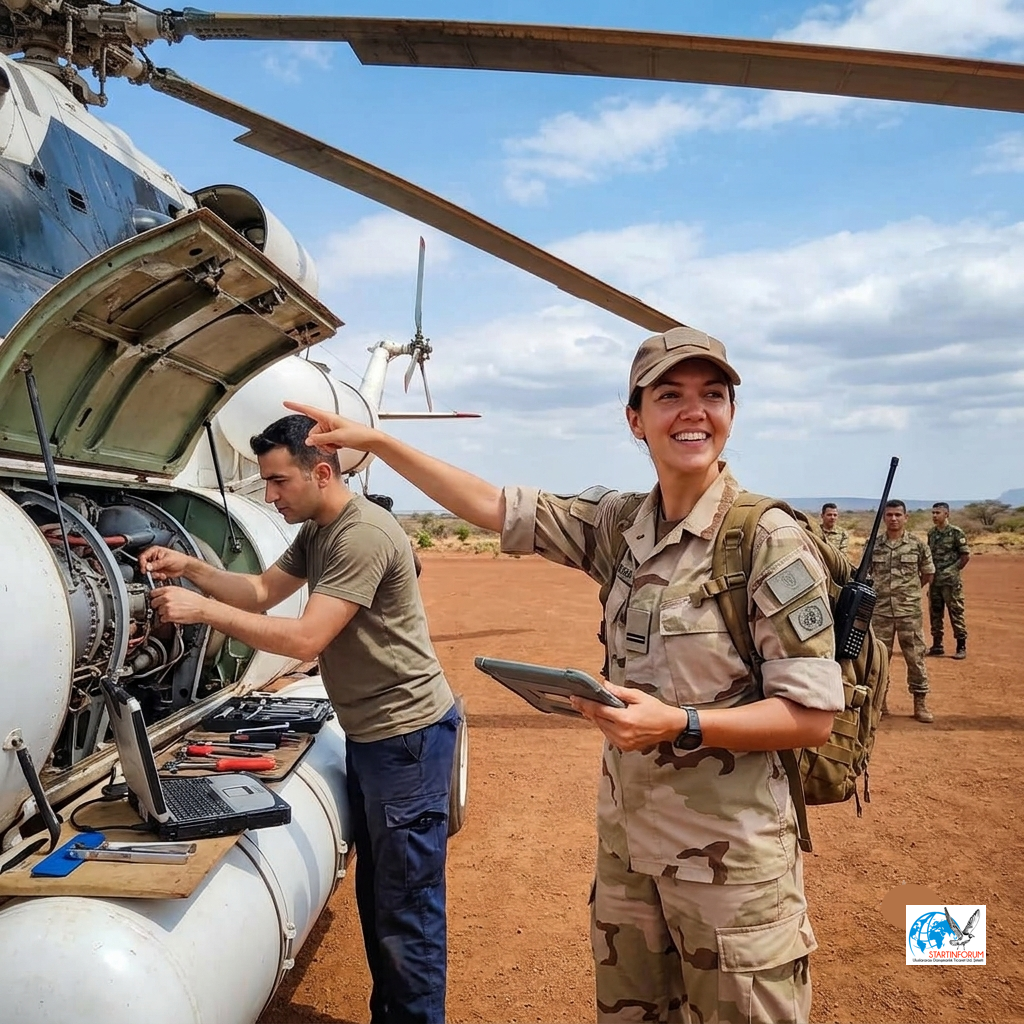
Modern military technology is usually judged by its heavy equipment—such as missiles with longer ranges, autonomous drone swarms, or precision-guided weapons fitted onto fighter jets. However, once these systems are used in real combat, their success depends entirely on a much less predictable factor: the people who operate, repair, and coordinate them.

Million-Euro Furniture Tender: Why Local Excellence Fails on European Paper
A recent public framework contract published on the German municipal procurement platform (RIB / vergabe.de) by a Berlin government body outlined a massive opportunity: a multi-million Euro, multi-year order for institutional office and educational furniture, specifically chairs and tables.


Leave a Reply