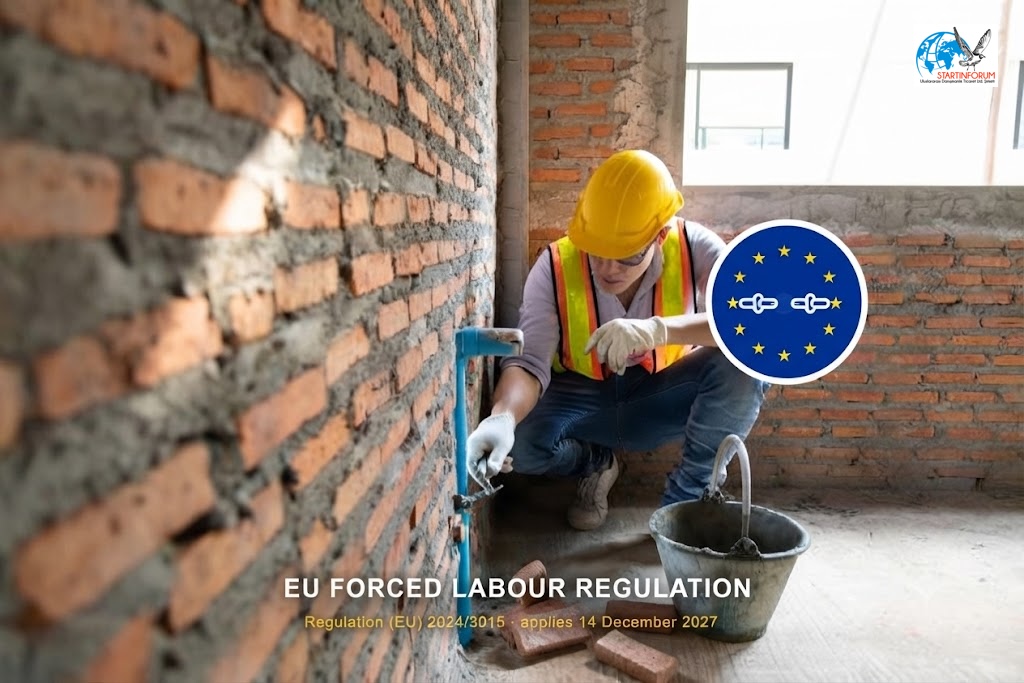
What Businesses and Exporters Need to Know Now
What Is It?
The European Union has officially launched its Forced Labour Single Portal following the implementation framework of the EU Forced Labour Regulation. Designed as a centralized digital hub, the portal supports stakeholders, regulators, and businesses in preparing for upcoming trade restrictions by providing guidelines, investigation updates, public data sources, and official product ban decisions.
While the portal went live on June 26, 2026, the regulation itself will become fully applicable and legally enforceable starting December 14, 2027.
From that date onward, any product made wholly or partly with forced labour will be strictly prohibited from being placed on the EU market, made available on it, or exported from the EU.
Why Was This Regulation Introduced?
Global supply chains are complex, and the EU has intensified its commitment to ethical trade and human rights protection. The core objectives behind this landmark regulation include:
-
Eradicating Exploitation: Ensuring that consumer purchasing power within the EU does not inadvertently support forced labour anywhere in the world.
-
Leveling the Playing Field: Protecting ethical businesses and domestic European producers from unfair competition by companies that cut corners through exploitative labor practices.
-
Corporate Accountability: Shifting the burden of proof onto supply chain operators and importers to guarantee complete transparency and compliance from raw material extraction to final retail.
How Will It Affect Businesses in the EU and Outside Exporters?
The impact of this regulation is far-reaching, transforming trade dynamics for both internal EU operators and international suppliers:
-
For EU Importers & Distributors: European companies bringing goods into the bloc will face stringent due diligence obligations. If competent authorities suspect forced labour at any tier of the supply chain, they can launch investigations, demand documentation, and order the withdrawal or confiscation of goods.
-
For Third-Country Exporters: Non-EU manufacturers and exporters (including key trading partners in Asia, Eastern Europe, and the Middle East) must prepare to open up their supply chains to exhaustive audits. Failure to prove that goods are free of forced labour will result in an immediate block from entering the lucrative EU market.
-
Market Disruption Risks: Non-compliance will not only lead to financial penalties and product seizures but also severe reputational damage as investigation results and bans are published publicly through the Single Portal.
What Measures Should Be Taken Right Now?
With the December 2027 enforcement deadline approaching, businesses cannot afford to wait. Companies trading with or within the EU should implement the following steps immediately:
-
Conduct Comprehensive Supply Chain Mapping: Trace products back to their raw material origins. Identify every sub-contractor, processor, and supplier involved in your manufacturing lifecycle.
-
Review and Update Supplier Codes of Conduct: Embed strict anti-forced labour clauses into all commercial contracts. Ensure suppliers understand that compliance is non-negotiable for maintaining trade relations.
-
Establish Robust Due Diligence Protocols: Adopt recognized ethical auditing frameworks to regularly monitor high-risk regions, sectors, or tiers within your supply chain.
-
Utilize Official Resources: Familiarize your compliance and legal teams with the newly launched digital infrastructure to understand how regulatory authorities will evaluate risks.
Official Resources & Links
To stay informed and align your compliance strategies with official EU standards, consult the following key resources:
-
EU Forced Labour Single Portal – Access guidelines, updates, and institutional frameworks via the European Commission.
-
Official Regulation Text & Legal Framework – Review the complete legislative text and updates on EUR-Lex.
-
Turkish Ministry of Trade & Chambers of Commerce Announcements – Keep track of local guidance updates provided for exporters navigating changing international trade laws.
STARTINFORUM’s Vision and Response
At STARTINFORUM, we view this regulation not merely as a regulatory hurdle, but as a critical turning point toward sustainable, transparent, and resilient global commerce. In an interconnected economy, compliance is no longer a peripheral legal task—it is a core pillar of international market competitiveness.
Cross-border exporters and regional small-to-medium enterprises often struggle with complex multi-tier supply chain mapping, administrative burdens, and navigating evolving EU trade standards. Without proactive intervention, valuable market access risks being compromised overnight.
How STARTINFORUM Can Help – Our Advisory and Services
To safeguard your export channels and ensure seamless market entry, STARTINFORUM provides specialized guidance and operational support:
-
Supply Chain Auditing and Mapping: Helping businesses trace production lines down to raw material tiers to identify and mitigate compliance vulnerabilities early.
-
Process Alignment and Due Diligence Frameworks: Structuring operational protocols that match official EU reporting standards and utilize the Forced Labour Single Portal effectively.
-
BIPACT Integration: Leveraging our BIPACT initiatives and cross-border cooperation networks to connect enterprises with verified, ethically compliant supply partners and institutional support hubs.
-
Capacity Building: Equipping management and trade teams with actionable training to handle international compliance audits with confidence.
STARTINFORUM’s Measures To Take
With the December 2027 enforcement deadline approaching, businesses cannot afford to wait. To protect your export channels and ensure complete alignment with the EU Forced Labour Regulation, STARTINFORUM recommends implementing the following critical steps immediately:
-
Conduct Comprehensive Supply Chain Mapping: Trace products back to their raw material origins. Identify every sub-contractor, processor, and supplier involved across your entire manufacturing lifecycle.
-
Review and Update Supplier Codes of Conduct: Embed strict anti-forced labour clauses into all commercial contracts. Ensure your suppliers understand that regulatory compliance is non-negotiable for maintaining active trade relations.
-
Establish Robust Due Diligence Protocols: Adopt recognized ethical auditing frameworks to regularly monitor high-risk regions, sectors, or tiers within your supply chain before authorities initiate inquiries.
-
Leverage Strategic Partnerships: Engage with professional trade networks like STARTINFORUM and utilize BIPACT frameworks to audit your operational readiness, close compliance gaps, and secure your market position ahead of time.


Leave a Reply